

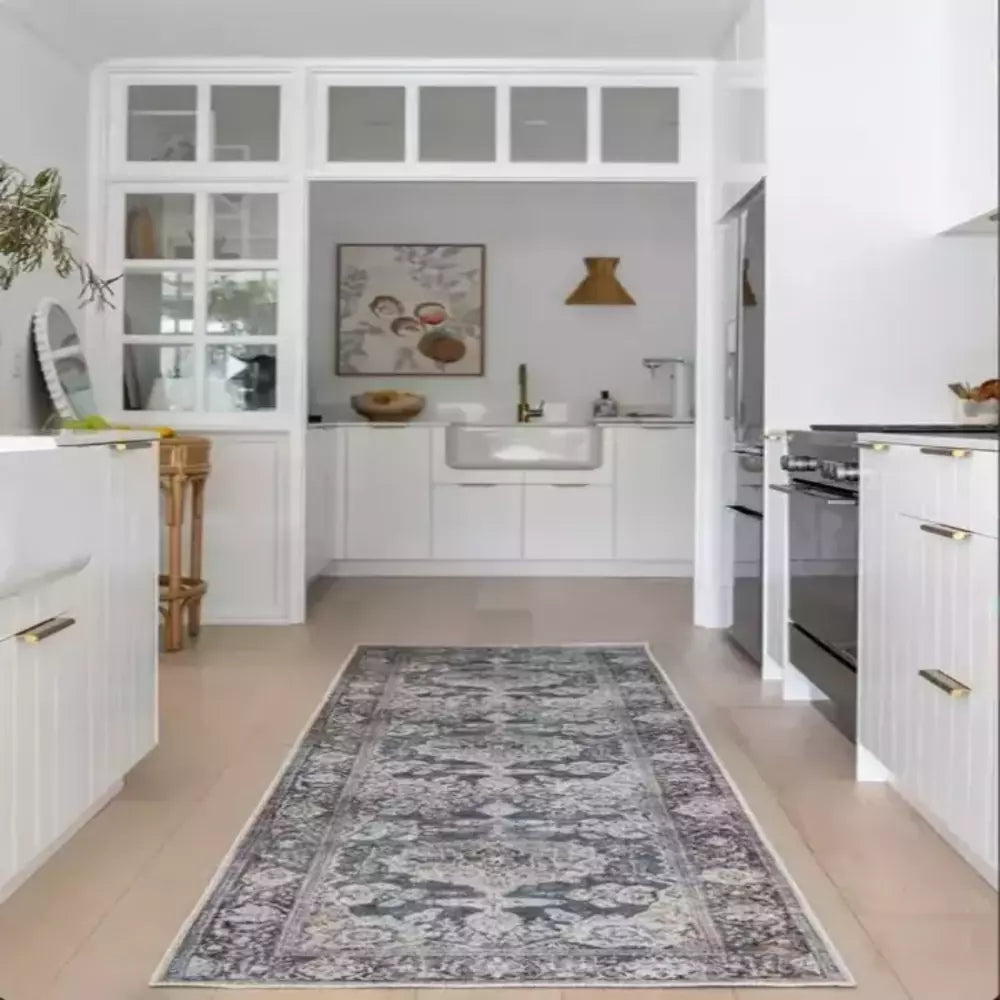
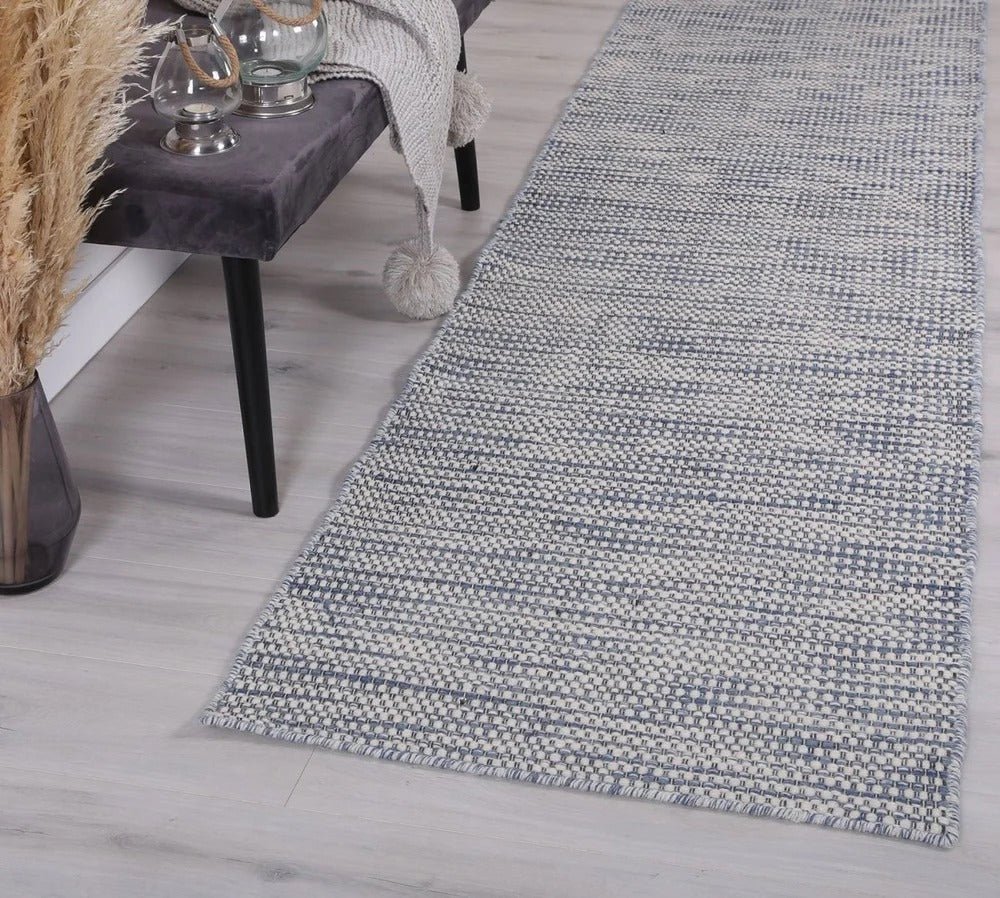
Go for a runner that's 24 to 30 inches wide, with 4 to 6 inches of bare floor showing on either side, and stop it 6 to 10 inches short of the walls at each end. That's the rule most flooring pros will give you, and honestly, it holds up in the vast majority of homes. Hallway runners get their size wrong more often than any other rug in the house, mostly because people eyeball it instead of measuring.
What Width Should You Pick For A Narrow Hallway?
Older terrace homes and tight apartment corridors tend to run 36 to 42 inches wide. In that range, 24 to 27 inches is your sweet spot for the runner itself. Go any wider with your modern hallway runner and you lose that clean strip of floor along the edges, which honestly is half of what makes a hallway look tidy in the first place. Go narrower and it starts looking like an afterthought rather than a real design choice.
A couple of things I'd check before buying:
- Measure at the narrowest point, not the widest. Old houses taper more than you'd think.
- Leave at least 3 inches of bare floor visible on each side.
- Watch out for door swings catching a wider runner.
Get this wrong and even a spacious hallway starts feeling boxed in. Hallway runners that crowd the walls do that more than people expect.
How Long Does The Runner Need To Be?
This is where most people mess up. Cut it too short and it reads as an afterthought. Too long and the ends start bunching or riding up against the skirting. Leave roughly 6 to 10 inches between the runner and each end wall as a rule of thumb. A 12-foot hallway usually ends up with a runner somewhere around 10 to 11 feet long, not 12 flat.
One thing worth flagging: if a doorway opens onto the hallway, keep the runner clear of the threshold. Foot traffic dragging in and out of that doorway will wear the edge down fast otherwise, and you'll notice it within a year or two.
Sizing for hallway runners isn't complicated once you've got a tape measure out, but skipping that step is where most people go wrong.
Should The Runner Match The Rest Of Your Home?
That's more taste than measurement, to be fair. A lot of homeowners these days go for modern hallway runners with geometric patterns or flat, muted tones, since they tend to bridge two different room styles without clashing. Connecting a traditional lounge to a newer kitchen? A low-pattern, neutral runner is usually the safer pick there.
Do Hallway Sizes Differ By Country?
Quite a bit, actually. Australian homes built between the 1960s and 1990s often have hallways sitting around 1 metre wide, or roughly 39 inches. That's why shoppers hunting for hallway runners Australia wide tend to land on 70 to 80cm widths as the standard fit. Worth double-checking your own hallway anyway, since two houses on the same street can differ by several centimetres depending on past renovations.
None of this needs to be complicated. Measure properly, leave the right gaps, and the runner does the rest. Hallway runners sized to the actual space wear more evenly and last longer too, simply because the foot traffic falls where it's supposed to rather than off to one side. Five minutes with a tape measure now saves you a lopsided-looking hallway later.


Leave a comment
This site is protected by hCaptcha and the hCaptcha Privacy Policy and Terms of Service apply.